
The short answer: open your PDF in a watermarking tool, type your watermark text, set the position, size, color, and opacity, and apply it to every page. The whole job takes a couple of minutes — and a good watermark sits behind your text, visible but never in the way.
Why text watermarks
Text watermarks are the workhorses: DRAFT, CONFIDENTIAL, SAMPLE, DO NOT DISTRIBUTE. They're quick to create, easy to read at any size, and perfect for marking a document's status. If the message matters — "this isn't final," "this is private" — text is the right choice. A company name set as a faded text watermark works well for branding on invoices and proposals too.
Wording matters more than people think. Pick the word that matches what you're worried someone will do with the file: DRAFT on a contract under negotiation, CONFIDENTIAL on financials, SAMPLE on portfolio proofs. Plain English beats a vague symbol every time — a lone © in the corner doesn't tell anyone anything.
How to add a watermark to a PDF
1. Open the file in a watermarking tool. PDFEdit's watermark tool runs in your browser — free, no sign-up, and the file stays on your device.
2. Type your watermark text. Type the wording and pick a font, size, and color. Big and bold reads better at low opacity than small and timid.
3. Set the position and rotation. The classic is diagonal across the center of the page, tilted about 45 degrees — impossible to miss, easy to read past. For subtler marking, a footer or corner placement works. Whichever you choose, apply it to all pages. A watermark on page one only is barely a watermark.
4. Dial in the opacity. This is where most people go wrong. Too dark and it fights the text for attention on every page; too light and it's pointless. You're aiming for clearly visible but unmistakable as background — readers should notice it once, then read straight through it. If you're unsure, err on the lighter side: a subtle watermark still marks the document, while a heavy one just annoys everyone who has to read it.
5. Put it behind the text. A watermark layered in front of your content hurts readability everywhere it lands. Behind the text, it marks the document without getting in the way. If your tool offers layering options, choose background.
6. Download and spot-check. Flip through the pages — especially dense ones with tables and small print — and confirm everything is still easy to read. If a table turned into a puzzle, lighten the watermark and redo it.
Watermarks for common situations
Draft contracts. A big diagonal DRAFT tells everyone the terms aren't final. This prevents the classic disaster: someone acting on version three when you're already on version six. It also protects you — nobody can claim they thought an early draft was the agreed deal.
Confidential documents. HR files, financials, unreleased pricing — a CONFIDENTIAL mark sets expectations before anyone reads a word. For documents with a genuinely limited audience, pair it with password protection so the marking has teeth.
Invoices and proposals. Your company name as a faded text watermark behind the content looks polished and ties the document to your business. Keep it subtle — the invoice still needs to be readable at a glance, and your client shouldn't need to squint past your branding to find the total.
Sample work. Designers and photographers sending proofs: a SAMPLE watermark across the pages discourages unpaid use without ruining the preview. It's the standard compromise between showing your work and giving it away.
Can you remove a watermark later?
If you added the watermark yourself as a separate layer, yes — open the file in an editor, select the watermark layer, and delete it. That's also worth remembering in reverse: anyone with an editor can remove your watermark too, which is one more reason watermarks aren't security.
If the watermark was burned into a scanned image, removal means reconstructing the background pixels underneath — possible in theory, ugly in practice. The practical takeaway: keep an unmarked copy of anything important — in PDFEdit, that just means downloading once before you watermark and once after. You'll thank yourself when the client approves the "final" draft and asks for a clean version without the DRAFT stamp.
Mistakes people make
Making it too dark. If readers have to squint past your watermark, it's too strong. Watermarks are background, not headlines.
Watermarking only the first page. Anyone can screenshot page two. Apply it to the full document or don't bother.
Making it too dark. If readers have to squint past your watermark, it's too strong. Watermarks are background, not headlines. Start around 15-20% opacity and adjust from there.
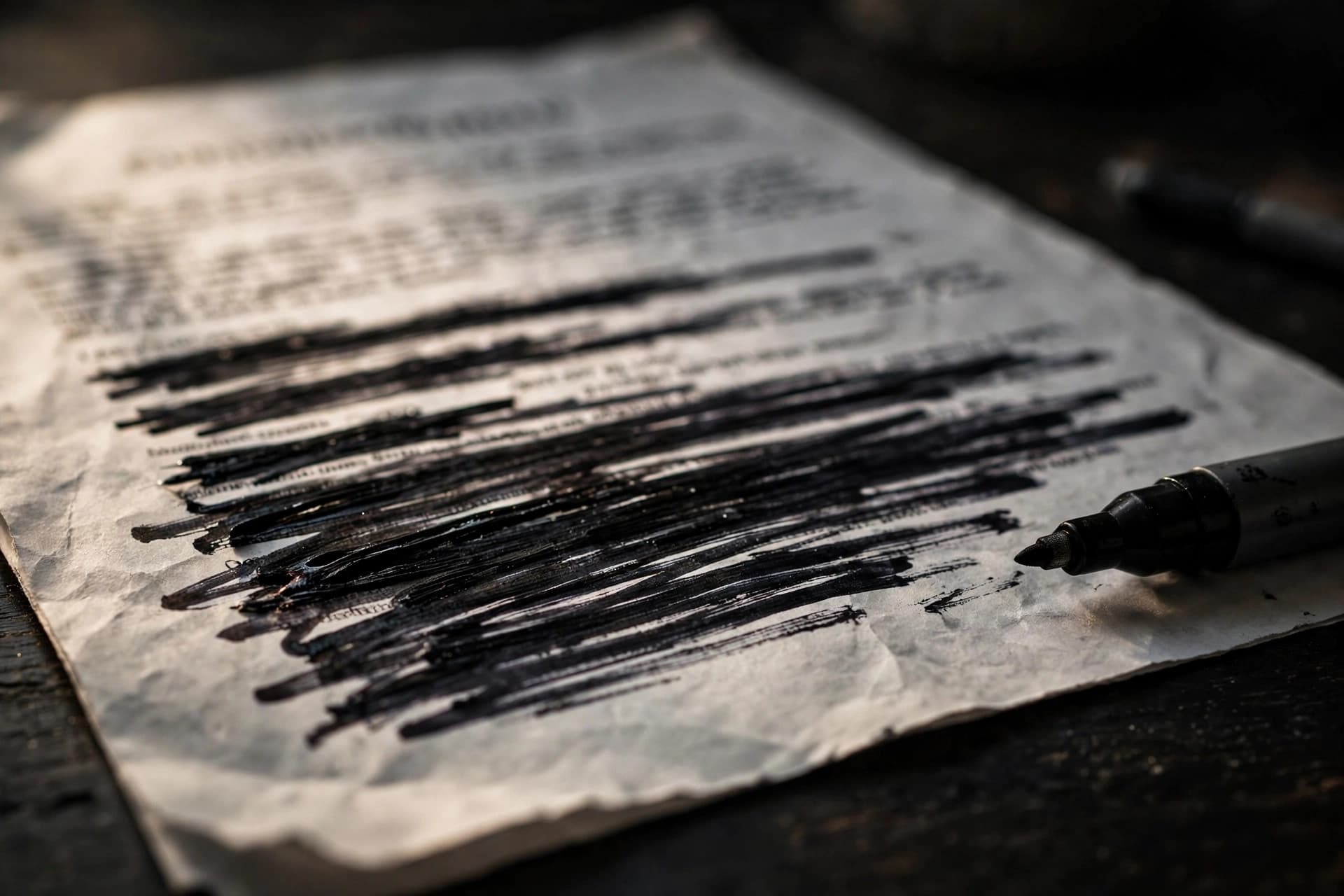
Forgetting it doesn't stop copying. A watermark marks ownership and status. It doesn't prevent screenshots, text extraction, or determined misuse. For information that must never be seen, redact it. For files with a limited audience, password-protect them. Watermarks do their own job well — just don't ask them to do someone else's. That's why PDFEdit keeps watermarking, redaction, and encryption as separate tools instead of one blurry "protect" button.