The short answer: use Word while a document is still being written and edited. Use PDF the moment it's finished and needs to look the same for everyone who opens it. Most formatting disasters come from using one where the other belonged.
This is one of those questions that seems basic until it costs you something — a resume that arrives as a jumbled mess, a contract where the page breaks shifted and the signature landed alone on page 9. The two formats were built for different jobs, and picking the right one is mostly about knowing which job you're doing.
What each format is actually for
Word (.docx) is a working format. It's designed for drafting, revising, commenting, and collaborating. Track changes, redlines, suggestions — all of that lives in Word. The trade-off: a Word file renders using the fonts and software on the reader's machine, so it can look different — sometimes very different — from what you saw.
PDF is a finished format. It freezes your layout: fonts, spacing, images, page breaks — everything stays exactly where you put it, on every device, forever. That's why it's the standard for anything final: resumes, invoices, contracts, manuals, tax forms, ebooks.
A useful rule of thumb: if someone might need to change the words, send Word. If they only need to read, print, or sign them, send PDF.
Side-by-side comparison
| Word (.docx) | ||
|---|---|---|
| Editing | Built for it | Possible, but not its strength |
| Layout consistency | Varies by device and fonts | Identical everywhere |
| File size | Usually smaller for text | Can be larger, compresses well |
| Collaboration | Track changes, comments | Comments and markup only |
| Signing | Awkward | Standard — built for it |
| Printing | Unpredictable | Exactly what you see |
| Accessibility | Good with styles | Good when tagged properly |
When Word wins
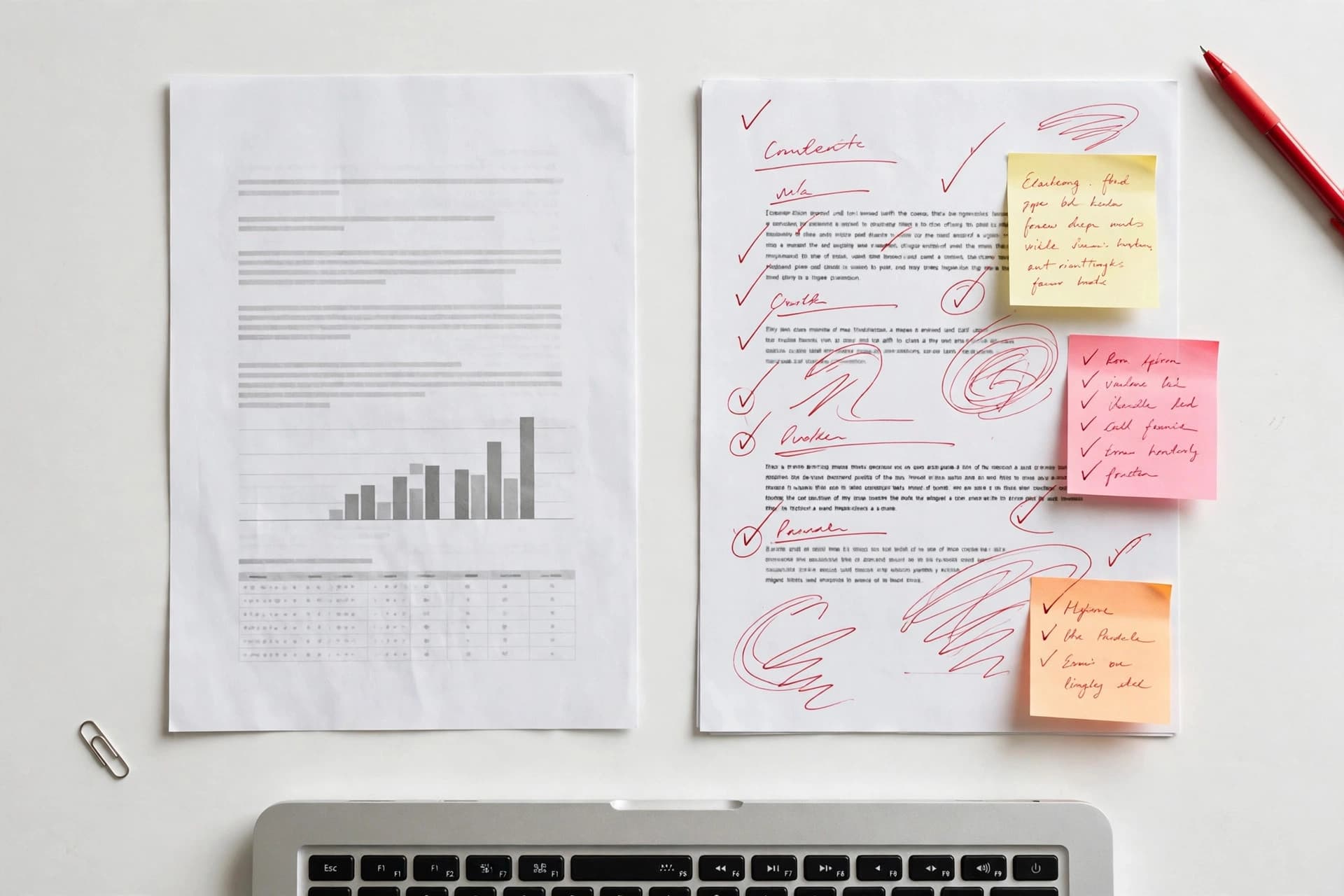
Collaborative drafting. If three people are editing a proposal, Word's track changes is the right tool. Passing a PDF back and forth for edits is miserable — everyone ends up with conflicting marked-up copies.
Templates people fill in. Job application forms, internal worksheets, anything where the recipient is expected to type into the document. (Though for forms that must print identically, a fillable PDF is often better — and you can complete one right in your browser with an online PDF editor.)
Documents that live and change. A product spec, a living handbook, a manuscript in progress. These are works in progress, and Word treats them that way.
When PDF wins
Resumes and job applications. This is the big one. Recruiters open resumes on phones, tablets, old laptops, and applicant tracking systems. A Word resume can reflow into chaos on any of them. A PDF looks exactly as designed, everywhere. Unless the job posting specifically asks for .docx — some older hiring systems parse Word better — PDF is the answer.
Contracts and legal documents. Both parties need to see byte-for-byte the same document. PDF locks the layout and shows any tampering more clearly. Sign it with a proper electronic signature tool and you're done.
Invoices and financial documents. An invoice that reflows is an invoice that gets questioned. PDF keeps your line items, totals, and branding exactly where you put them.
Anything being printed. Print shops ask for PDF for a reason. What you see is what comes out of the printer — no surprise font substitutions, no widowed headings.
Converting between them without wrecking your layout
You'll constantly need to go both directions, and both are easy to get right:
Word to PDF: This is the safer direction. Upload your .docx to a Word to PDF converter, download the result, and quickly flip through it to confirm nothing shifted. Text formatting carries over well; images, charts, tables, and headers/footers are skipped, so they're the things to check for.
PDF to Word: This direction needs a bit more care. A PDF to Word converter extracts the document's text into an editable DOCX — paragraphs and page breaks survive, but formatting, tables, and images don't. Clean, text-based PDFs give you clean, usable text. Scanned PDFs — pictures of pages — need OCR first, or the converter has no text to work with. Either way, give the converted file a once-over before you rely on it.
What about Google Docs and Apple Pages?
The same logic applies, just with different names. Google Docs is a working format like Word — great for collaboration, unreliable for final delivery. Export to PDF before you send anything that matters. Apple Pages is even trickier: not everyone can open a .pages file at all, so exporting to PDF isn't just good practice, it's basic courtesy.
The pattern holds across every word processor ever made: draft in the editable format, deliver in the frozen one. The specific app doesn't change the principle.
Common mistakes
Sending a Word file "because they can edit it if needed." They won't need to, and now your carefully formatted proposal looks different on their machine. Default to PDF for anything outbound and final.
Emailing a PDF when you actually want feedback. Then you get reply-all threads quoting page numbers instead of tracked changes in the margin. Match the format to the task.
Assuming PDF means unchangeable. PDFs can be edited — that's rather the point of tools like PDFEdit's Studio. If a document must be tamper-evident, that's what digital signatures and proper document security are for, not the file format alone.
Forgetting to check the converted file. However good the converter, spend twenty seconds scrolling through the result before you send it. Catching a shifted table now beats an embarrassed follow-up email later.
The whole debate fits in one sentence: draft in Word, deliver in PDF. Get that habit right and you'll never think about file formats again — which is exactly how it should be.