
The short answer: open the PDF in an online form filler, click into each field, type your answers, add your signature if there's a signature line, and download the finished file. No printer, no scanner, no photographing a paper form with your phone.
Almost everyone has done the print-fill-scan dance at some point: print the form, fill it in by hand, scan it (or worse, photograph it), email the crooked result. It produces ugly documents and wastes twenty minutes. Filling the PDF directly takes five.
How to fill out a PDF form online, step by step
- Open the PDF in an editor. PDFEdit's Studio runs right in your browser — no printing, no sign-up.
- Place a text box over each blank and type. Click where your answer goes, type it, and match the font size to the form. This works on any PDF — fillable or not — because you're adding crisp text on top of the page, not wrestling with the form's own fields.
- Handle checkboxes and radio buttons. Place a checkmark character (✓) or an X as text inside the box.
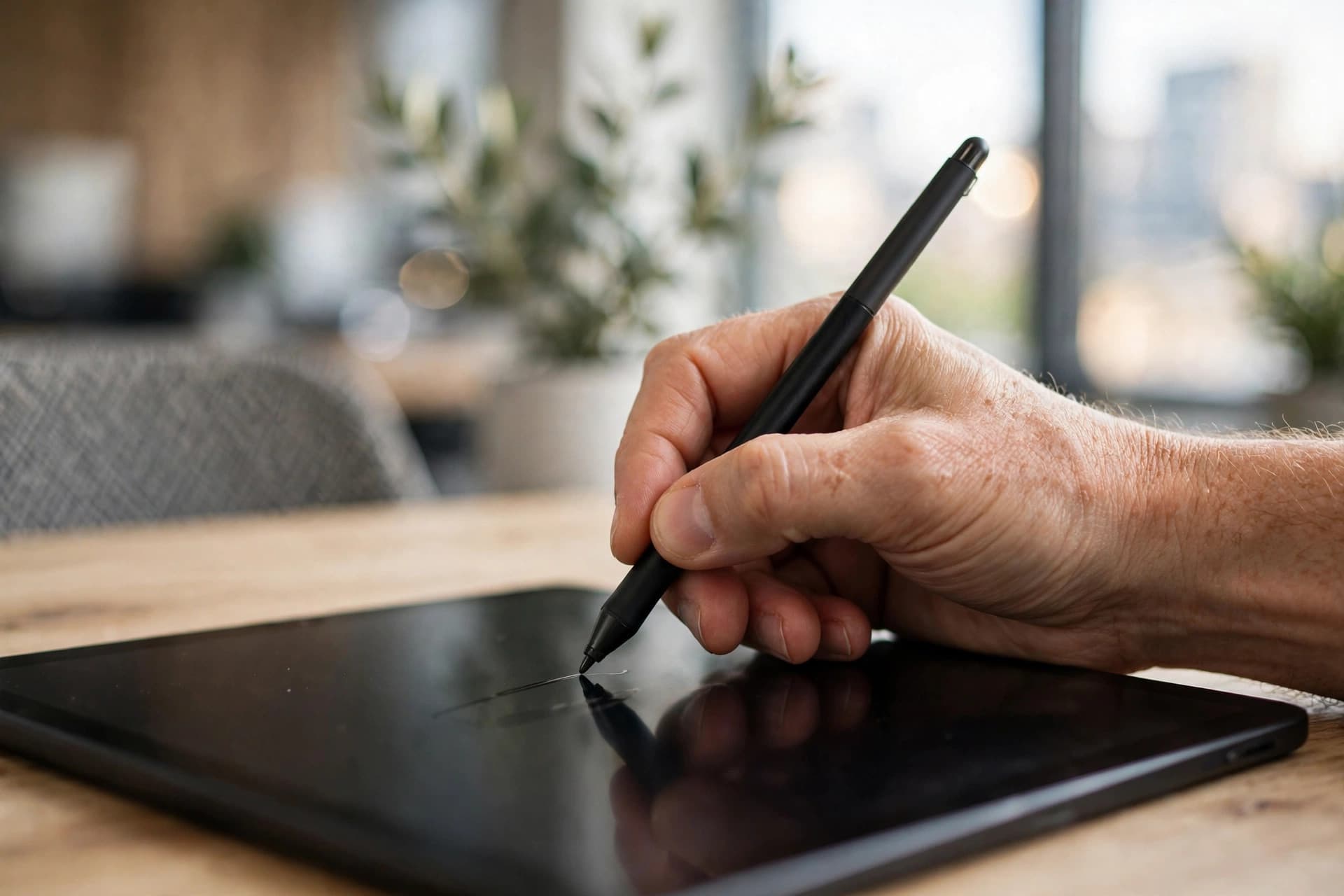
- Add your signature. Signature line? Draw it with your mouse or trackpad, type your name in a script font, or upload a photo of your handwritten signature. For anything official, a dedicated signing flow keeps it tidy.
- Review, then download. Read through the whole form once — typos on official forms are painful to fix after submitting — then download your completed PDF.
Your filled form is a normal PDF. Email it, upload it to the portal, or print it if someone insists on paper. It'll look clean and professional either way.
One honest note: the Studio doesn't click into a form's built-in fillable fields the way a desktop app might — instead you overlay text exactly where you want it. The result looks just as good, and it works identically on every form, which built-in field support can't promise.
Why this works on every form
Here's the thing nobody tells you: a huge number of PDFs labeled as "forms" aren't actually fillable. They're just scans or flat documents with blank lines drawn on them. Clicking does nothing.
The text-box approach sidesteps the whole problem — it doesn't matter whether the PDF has real form fields, because you're not using them. Open the PDF in PDFEdit's Studio, add a text box over each blank line or box, type your answer matching the font size to the form as closely as you can, and drop in a ✓ or an X for checkboxes.
It takes a few minutes, but the result looks far better than handwriting — and unlike a scan, the text stays crisp at any zoom level.
Tips for forms that look professional
Match the form's typography. If the form uses a plain sans-serif at roughly 11pt, set your text boxes to match. Text that's obviously pasted in a different font screams "I hacked this together."
Mind the alignment. Text should sit on the line, not float above it or sink through it. Zoom in to 150% while placing text boxes — what looks fine at full-page zoom can be visibly off when someone actually reads it.
Don't shrink to fit — abbreviate instead. If your address doesn't fit the box, shorten it ("St." instead of "Street") rather than shrinking the font to microscopic size. Readability beats completeness.
Save a blank copy. Before you fill anything in, save the original blank form separately. Government portals love to reject submissions for tiny errors, and re-downloading the blank form is annoying. Keep form-blank.pdf and form-filled.pdf.
Flatten before sending, for sensitive forms. Once you're done, exporting a flattened copy bakes your answers into the page so nobody can accidentally (or deliberately) edit them afterward. Keep your editable version too, in case you need changes.
Filling out forms on your phone
Half the time, the form arrives while you're nowhere near a computer — an email attachment you need to return today, a rental application while you're apartment hunting. Good news: this works fine on a phone.
Open the PDF in your mobile browser using an online editor. The process is identical — tap fields, type answers, add a signature with your finger. Two things to watch for on small screens:
Zoom in before placing text. On a phone screen, a text box that looks aligned at full-page view can be noticeably off. Pinch to zoom on each field as you fill it. It slows you down by seconds and the result looks dramatically better.
Don't let autocorrect embarrass you. Phone keyboards love to "fix" names, addresses, and ID numbers. Double-check every field after typing, especially proper nouns and anything with digits. An autocorrected street name on a legal form is a real problem.
Save to your files app, not just the browser. Mobile browsers are aggressive about clearing tab data. Download the finished PDF to your phone's Files app (or Google Drive, iCloud — wherever you keep documents) the moment you're done. Then attach it from there.
Honestly, for short one-page forms, a phone is often faster than a computer — you're already signed into your email, the file is right there, and the whole thing is done before you'd have finished booting a laptop.
Common mistakes
Filling the form in the browser's built-in PDF viewer, then losing it. Chrome and Edge let you type into fillable PDFs, but saving is unreliable — people regularly close the tab and lose everything. Fill it in a proper tool and download the file. A downloaded file can't vanish when you close a tab.
Forgetting required fields. Portals reject forms with blank required fields, often with unhelpful error messages. Before downloading, scroll through every page and check for empties — especially page 2, which everyone forgets.
Submitting a photo of a screen. If you've gone to the trouble of filling the PDF digitally, submit the PDF. Screenshots and phone photos of screens compress badly and look terrible. The digital file is the deliverable.
Using handwriting fonts for official documents. A script font signature is fine. Your entire tax form in a handwriting font is not. Keep body answers in a plain, readable font.
Filling out PDF forms online is one of those skills that pays for itself the first time you use it. Five minutes in a browser beats twenty minutes with a printer every single time — and the result looks like you hired someone to do it.